Act NOW and SAVE 10% on Heated Gear with promo code STAYWARM Ends 10/31/2026.
Everyday Free Shipping on orders over $249 * See Exclusions
Act NOW and SAVE 10% on Heated Gear with promo code STAYWARM Ends 10/31/2026.
Everyday Free Shipping on orders over $249 * See Exclusions


Act NOW and SAVE 10% on Heated Gear with promo code STAYWARM Ends 10/31/2026.
Everyday Free Shipping on orders over $249 * See Exclusions
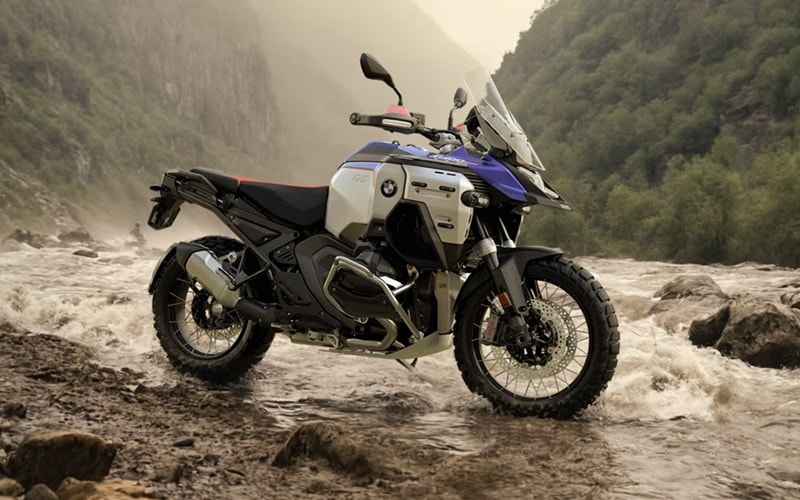
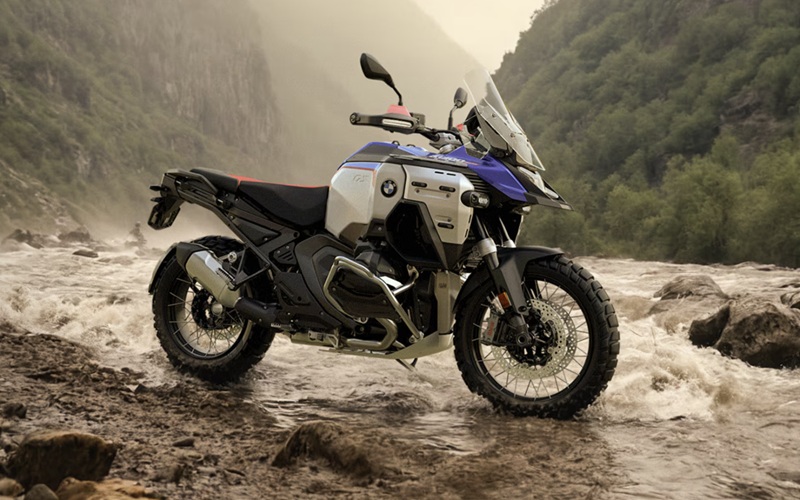
The latest generation of BMW’s adventure flagship adds a technology many riders have asked for on tall, long-travel motorcycles: Adaptive vehicle height control. If you are exploring urban grids, tight parking, uneven trailheads, or fully packed for a multi-day loop, this system can make a meaningful difference in everyday confidence. Below, we explain how it works, what it feels like on the road, and how to decide whether to add it to your build.
At its core, Adaptive vehicle height control automatically varies the motorcycle’s ride height at low speed and when stationary. As you pull away, the bike gently raises by 1.18 inches to restore full ground clearance and suspension travel. Shortly before you stop, it lowers again to help you place a foot more easily, step off the bike, or use the available center stand with comfort lift assistance. This happens nearly invisibly to the rider, and because the GS Adventure’s chassis uses BMW Motorrad EVO-Telelever and EVO-Paralever with Dynamic Suspension Adjustment, the system complements the bike’s planted, predictable feel.
On busy streets, the adjustment is most noticeable when stopping on off-camber surfaces or at sloped intersections. The bike settles under you, making it easier to find level footing even if the pavement is not cooperating. In trailhead parking or gravel pull-offs, it reduces the awkwardness of tall-ADV stops, particularly when your luggage is loaded and your legs are a bit tired from a long day. When you ride off again, you immediately regain the full suspension stroke and geometry that give the GS Adventure its composed behavior on rough patches and flowing backroads.
From a practicality standpoint, Adaptive vehicle height control is about reducing cognitive load. Instead of planning every stop around surface crown or searching for the perfect patch of level ground, you can relax and focus on traffic, terrain, and situational awareness. This pairs naturally with the bike’s other available technology, like the Automated Shift Assistant (ASA) that handles clutching and allows fully automatic or manual gear changes, and the radar-based Riding Assistant that helps monitor your surroundings.
For sizing and ergonomics, think of Adaptive vehicle height control as a dynamic assist rather than a permanent lowering measure. If you prefer full travel and standard geometry while moving but would appreciate more manageable stops, this option strikes an ideal balance. Riders who already feel at home on taller bikes will appreciate the extra reassurance at the end of a long day; riders on the cusp of the platform’s seat height will find it particularly helpful in traffic or tight maneuvers.
As you consider your build, remember how well BMW integrates accessories. The GS Adventure’s defined docking points make OEM luggage, tank bags, and protective equipment bolt on cleanly, and the 7.9-gallon tank supports real range between stops. The LED matrix headlight with available Headlight Pro improves visibility when late afternoons stretch into evening rides, and BMW Motorrad Full Integral ABS Pro supports confident braking, even on curvy parkways threading the city and its outskirts.
Adaptive vehicle height control is an available option, and many riders pair it with ASA for the smoothest low-speed feel. If your riding includes daily commutes that transition into weekend loops beyond the beltway, the combination is especially compelling. Bob's Motorcycles is serving Washington, Arlington, and Alexandria with expertise on how these systems feel together in the real world, and our team can walk you through configuration choices that match your height, cargo needs, and terrain mix.
Frequently Asked Questions:
Does the bike feel different when it raises or lowers itself?
The system operates smoothly and predictably. Most riders describe it as a gentle settle at stops and a natural return to full height as you roll away. Handling characteristics remain consistent in motion, preserving the GS Adventure’s confident feel.
Will Adaptive vehicle height control reduce off-road capability?
No. While you are moving, the motorcycle returns to its full ride height and suspension travel, so you maintain ground clearance and the geometry designed for off-road and mixed-surface riding.
How does it work with luggage and a passenger?
Adaptive vehicle height control complements Electronic suspension DSA with load compensation. Together, they account for weight changes and maintain a balanced stance, helping you manage starts and stops when fully loaded.
Is Adaptive vehicle height control a substitute for seat changes?
It serves a different purpose. Adaptive vehicle height control assists at low speeds and stops, while seat swaps change static ergonomics. Many riders benefit from both: a preferred seat plus the adaptive system for added convenience.

Read More about shipping exclusions
Please contact us if you have further questions.