Helmet Sale! Get 15% OFF reg. priced Helmets with promo code HELMET15 Shop Now>>
Get an EXTRA 15% OFF Everyday Low Price Tires with promo code TIRES15 >> SHOP NOW
Everyday Free Shipping on orders over $249 * See Exclusions
Helmet Sale! Get 15% OFF reg. priced Helmets with promo code HELMET15 Shop Now>>
Get an EXTRA 15% OFF Everyday Low Price Tires with promo code TIRES15 >> SHOP NOW
Everyday Free Shipping on orders over $249 * See Exclusions


Helmet Sale! Get 15% OFF reg. priced Helmets with promo code HELMET15 Shop Now>>
Get an EXTRA 15% OFF Everyday Low Price Tires with promo code TIRES15 >> SHOP NOW
Everyday Free Shipping on orders over $249 * See Exclusions
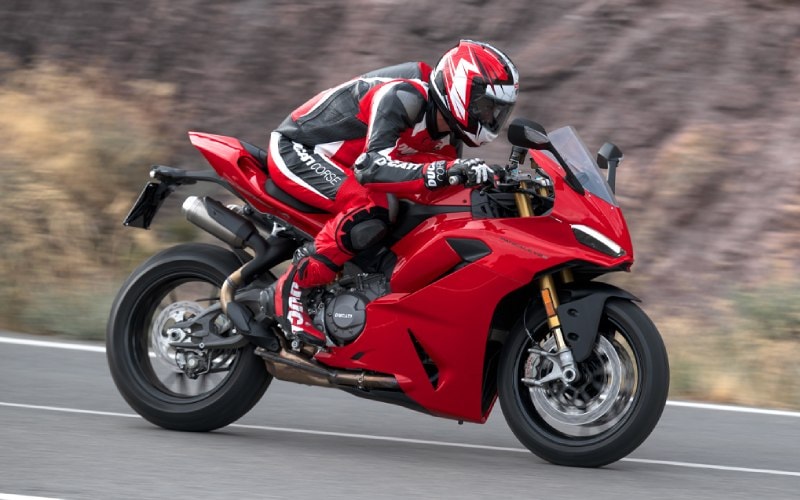
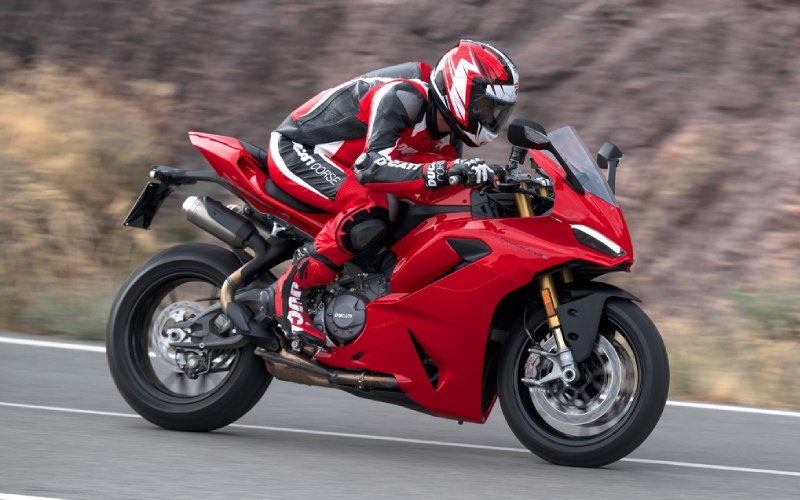
When riders ask us which middleweight supersport delivers the more confidence-inspiring electronics for Washington, D.C. streets and weekend backroads, we narrow the conversation to how the systems work mid-corner. The 2026 Ducati Panigale V2 packages a sophisticated, IMU-based suite—Cornering ABS, Ducati Traction Control, Ducati Wheelie Control, and Engine Brake Control—plus a bi-directional quickshifter. These features collaborate to keep the chassis settled as you tip in, manage lean-sensitive braking, and meter torque delivery when grip changes across painted lines, manhole covers, or those rippled patches you find on urban arterials. The 2026 Kawasaki Ninja ZX-6R brings a strong set of tools too—KTRC, selectable Full/Low Power Modes, KQS upshift-only, and KIBS on ABS-equipped models—but without an IMU, the systems are not lean-aware in the same way. That matters when you are trail-braking into a tight right-hander on a cool morning along Rock Creek Parkway or rolling across uneven seams on the way to scenic farm roads just beyond the Beltway.
The Ducati’s color TFT is crisp, intuitive, and supports available smartphone connectivity through Ducati’s accessory ecosystem for basic media and call management. Kawasaki’s 4.3-inch TFT also offers smartphone connectivity via RIDEOLOGY THE APP MOTORCYCLE. Both setups strike a thoughtful balance between information density and clarity. Where the Panigale V2 distances itself is the way the electronics feel transparent—present when you need them and quiet when you don’t—so you can focus attention on your line and reference points rather than on managing traction, lift, or overrun manually. That fluidity shows up on a familiar route through city traffic, as well as during spirited runs on Maryland and Northern Virginia backroads where surfaces and conditions vary corner to corner.
Power is plentiful on both bikes. The ZX-6R’s 636 cc inline-four makes a strong 127.0 hp at 13,000 rpm and rewards riders who love living near redline. The Ducati’s 890 cc twin is rated at 120 hp and 69 lb-ft, and the broader spread of torque makes a practical difference in Washington, D.C. traffic and on rolling terrain. Rolling on from mid-rpm to pass a delivery van, flow up a ramp, or square a corner feels effortless. Combine that with the V2’s lighter wet weight (no fuel) and you have a platform that takes less effort to settle onto the edge of the tire. If you are still building advanced skills—body position, trail-braking, throttle application—the Ducati’s IMU-backed aids and predictable torque curve make each repetition cleaner.
Suspension and braking hardware complete the experience. The ZX-6R’s Showa SFF-BP fork and Uni-Trak rear are time-tested, giving the Kawasaki a planted, familiar feel under heavy braking and quick transitions. Ducati counters with Brembo radial-mount calipers and a frame and swingarm package that emphasizes front-end feel. It is not just spec-sheet bragging—the way the Panigale communicates weight transfer and tire load lets you trust the bike earlier in the corner, which in turn lets you ride smoother and, ultimately, faster with less effort.
Local riders frequently split saddle time among urban commutes, Beltway stints, and somewhere scenic like Great Falls or the C&O Canal region on weekends. In stop-and-go corridors or downtown cores, low-to-midrange torque and a cooperative quickshifter reduce fatigue. On the Beltway, wind protection, a steady throttle hand, and electronics that do not get in your way make the miles pass quietly. On backroads, where surface quality and radius can shift without warning, corner-aware rider aids give you confidence to carry lean and reapply throttle earlier. The Panigale V2’s IMU-based calibration is the differentiator across all three scenarios. The ZX-6R, meanwhile, keeps its appeal for riders who want a high-revving character and a traditional supersport rhythm, especially when the road opens and the tachometer becomes part of the soundtrack.
Both bikes offer smartphone connectivity, which is useful for managing music and keeping an eye on ride data. Keep in mind that features vary slightly by market and model configuration, and that accessory options can expand what your bike can do day-to-day without compromising the core mission of a supersport machine.
These are the features that translate into real-world confidence, not just lap-time deltas. When you evaluate both bikes, think about the riding you actually do most weeks and which system behavior supports it with the least mental overhead.
Do I need cornering ABS for everyday riding in Washington, D.C.?
While no technology replaces smooth inputs, cornering ABS can help keep the chassis calm when braking on imperfect surfaces or when an unexpected slowdown happens mid-corner. It is especially relevant on city-to-backroad transitions where surfaces vary.
Is a bi-directional quickshifter worth it if I mostly ride on weekends?
Yes. Up-and-down quick shifting reduces workload and helps maintain chassis stability during aggressive braking and corner entries, which is valuable even on relaxed weekend rides where you practice smoother technique.
How do traction and wheelie control help on local backroads?
They meter torque delivery and front lift so you can confidently reapply throttle over patches, paint, and seams without upsetting the bike. This encourages earlier exit drives and a smoother riding rhythm.
Can smartphone connectivity integrate with my normal routine?
Both bikes offer smartphone connectivity. It is helpful for basic call and media management and, depending on accessories, can support ride logging without distracting from the core riding experience.
If electronics that work with you—not against you—are your priority, the 2026 Ducati Panigale V2’s IMU-driven package stands out. For a personalized walkthrough from a team serving Washington, D.C., Arlington, VA, and Alexandria, VA, connect with Bob's Motorcycles for knowledgeable guidance tailored to your routes, skill level, and goals.
*Image may not be actual model

Read More about shipping exclusions
Please contact us if you have further questions.