Helmet Sale! Get 15% OFF reg. priced Helmets with promo code HELMET15 Shop Now>>
Get an EXTRA 15% OFF Everyday Low Price Tires with promo code TIRES15 >> SHOP NOW
Everyday Free Shipping on orders over $249 * See Exclusions
Helmet Sale! Get 15% OFF reg. priced Helmets with promo code HELMET15 Shop Now>>
Get an EXTRA 15% OFF Everyday Low Price Tires with promo code TIRES15 >> SHOP NOW
Everyday Free Shipping on orders over $249 * See Exclusions


Helmet Sale! Get 15% OFF reg. priced Helmets with promo code HELMET15 Shop Now>>
Get an EXTRA 15% OFF Everyday Low Price Tires with promo code TIRES15 >> SHOP NOW
Everyday Free Shipping on orders over $249 * See Exclusions
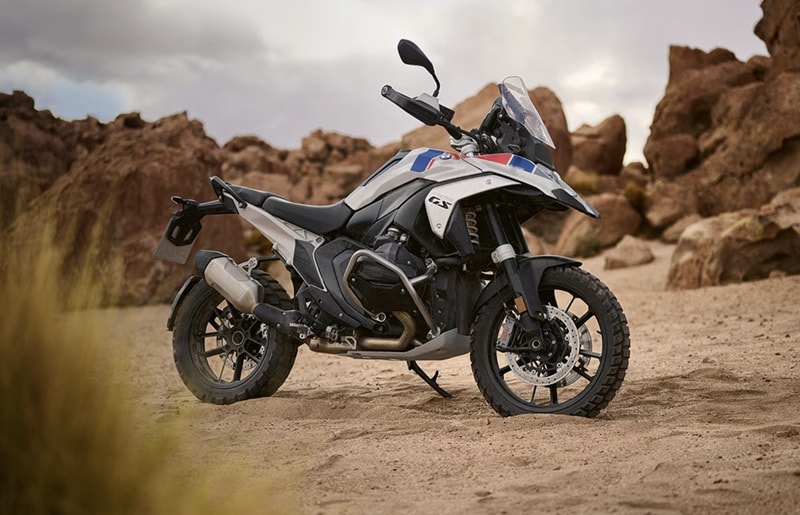
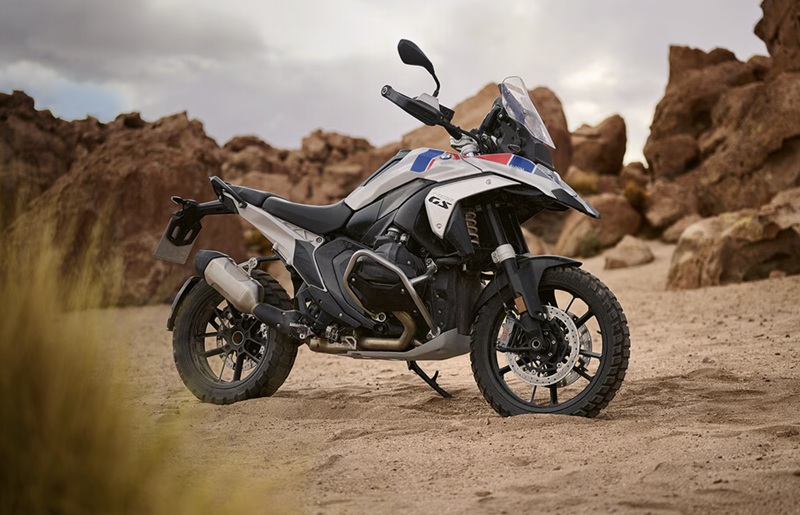
When riders compare two flagship adventure bikes, one question comes up again and again: which one feels easier to manage in stop-and-go traffic, U-turns, and low-speed neighborhoods? For Baltimore, MD riders navigating city streets, short highway hops, and quick detours onto rougher backroads, easy balance and low-effort control can matter more than peak horsepower. Here we break down how the 2026 BMW R 1300 GS and 2026 KTM 1390 Super Adventure S each approach low-speed poise, slow-maneuver stability, and real comfort you can feel at parking-lot speeds.
From rolling up to the Inner Harbor to clearing a tight spot in a Fells Point lot, the ability to modulate clutch, throttle, and brakes smoothly isn’t just a convenience—it’s confidence. Short on-ramps, traffic-signal sprints, uneven patchwork pavement, and the ever-present steel plates can unsettle tall bikes. Your machine’s chassis geometry, driveline character, and electronic aids have to work together, not against you.
The 2026 BMW R 1300 GS leans into this challenge with a predictable, torquey boxer twin and the hallmark EVO Telelever and EVO Paralever chassis. That front-end design resists dive under braking and keeps geometry more consistent, so the bike steers neutrally even when you’re trail-braking to thread through a tight gap. The KTM counters with a rigid trellis frame and WP Semi-Active Suspension (SAT) that does a great job smoothing sharp-edged hits and adapting damping on the fly. While both are excellent, the GS’s unique chassis pieces lend an extra layer of calm when inputs are abrupt or grip is imperfect.
Clutch engagement, gearing, and driveline smoothness all play a role in low-speed confidence. BMW’s available Automated Shift Assistant (ASA) automates clutch operation and can even handle shifting, so you can focus on line choice and balance instead of juggling levers. It’s not about riding “automatic” all the time—it’s about removing friction in moments that add stress, like mid-block U-turns or creeping through a crowded festival area. KTM’s optional Quickshifter+ provides slick clutchless upshifts and downshifts once you’re rolling, which is terrific on open roads, but it doesn’t manage clutch take-up the way ASA does when you’re inching forward or feathering at walking pace.
Another subtle advantage for BMW is the smooth, low-lash Cardan shaft final drive. There’s no chain slack to factor in when modulating at 5-10 mph, and no chain lash to amplify jerky throttle inputs. KTM’s chain drive is lighter and more traditional for sport-adventure intent, and many riders prefer its response at speed. In the Baltimore, MD, context—tight gas stations, angled alleys, and irregular asphalt—the GS’s shaft drive helps every micro-input feel a bit more precise.
Confidence often comes down to the last inch—literally. BMW’s available Adaptive Vehicle Height Control can lower the bike at a stop, then transition back toward ride height as you move off. That shortens the reach to the ground and reduces the tipping-point sensation taller ADV bikes can have at a standstill. Combine that with the GS’s broad ergonomic adjustability (and multiple seat-height options), and more riders find a natural stance right away. KTM offers adjustable contact points—levers, handlebar positions, seat settings—and an improved wind-tunnel-tested windshield for comfort at speed. Those are meaningful upgrades, and with its semi-active suspension, the Super Adventure S is plush on the move. For dab-and-go convenience and relaxed city maneuvers, the GS’s height control option can be a difference-maker.
Both bikes bring deep electronics suites: lean-angle sensitive ABS, sophisticated traction control, multiple ride modes, tire-pressure monitoring, cruise control, and optional radar-based distance-keeping cruise. Where the GS stands out is the balance of standard safety features (BMW Motorrad Full Integral ABS Pro, Dynamic Traction Control, Hill Start Control, Dynamic Cruise Control) and options that specifically target low-speed ease (ASA and Adaptive Vehicle Height Control). KTM’s tech is no slouch—the 8-inch portrait TFT is brilliantly legible, and modes like OFFROAD and optional RALLY provide granular control. At the “walking-pace” end of the spectrum, however, BMW’s integrations trend toward making the bike feel lighter and more cooperative with fewer rider inputs.
One final note: both bikes can be kitted for serious travel. KTM’s WP SAT, new LED headlight with cornering lights, and multi-adjustable cockpit make it an outstanding long-day companion. BMW’s LED matrix headlight with available Headlight Pro delivers a crisp light signature and confident corner illumination. The takeaway is not that one is “only” for the highway and the other is “only” for mixed surfaces. Instead, the GS stacks small advantages that show up every time you navigate a tight line or dab a foot—precisely where urban riders feel the difference.
Is the 2026 BMW R 1300 GS easier to handle at low speeds than the 2026 KTM 1390 Super Adventure S?
For many riders, yes. The GS’s available Automated Shift Assistant and Adaptive Vehicle Height Control reduce effort at clutch take-up and stops, while EVO Telelever stabilizes the front under brake. KTM’s Quickshifter+ and semi-active suspension excel once you’re moving, but ASA and height control improve the GS’s “first 10 feet” feel.
Does the shaft drive on the GS really make a difference in the city?
It can. With no chain slack, small throttle inputs at 5-15 mph translate more directly to the rear wheel, which helps smooth parking-lot turns and curbside maneuvers. It also reduces regular chain maintenance.
Which bike has more helpful electronics for everyday riding?
Both are excellent. The KTM brings a superb 8-inch portrait TFT and deep ride-mode options. The BMW includes a robust baseline (BMW Motorrad Full Integral ABS Pro, DTC, HSC, DCC, heated grips, Keyless Ride) and offers ASA and height control, which specifically target low-speed ease.
For riders comparing these two in and around Charm City, Bob's Motorcycles is serving Baltimore, MD, Washington, D.C., and Arlington, VA, with expertise on both the day-to-day realities of city riding and the weekend distances ADV bikes are built to conquer. Whichever machine you choose, keep your lens on the kind of control that reduces stress: slow steering, composure, manageable reach to the ground, and the fewest moving parts during clutch/throttle work. That’s where the 2026 GS tends to feel intuitive from the first block.

Read More about shipping exclusions
Please contact us if you have further questions.