Helmet Sale! Get 15% OFF reg. priced Helmets with promo code HELMET15 Shop Now>>
Get an EXTRA 15% OFF Everyday Low Price Tires with promo code TIRES15 >> SHOP NOW
Everyday Free Shipping on orders over $249 * See Exclusions
Helmet Sale! Get 15% OFF reg. priced Helmets with promo code HELMET15 Shop Now>>
Get an EXTRA 15% OFF Everyday Low Price Tires with promo code TIRES15 >> SHOP NOW
Everyday Free Shipping on orders over $249 * See Exclusions


Helmet Sale! Get 15% OFF reg. priced Helmets with promo code HELMET15 Shop Now>>
Get an EXTRA 15% OFF Everyday Low Price Tires with promo code TIRES15 >> SHOP NOW
Everyday Free Shipping on orders over $249 * See Exclusions
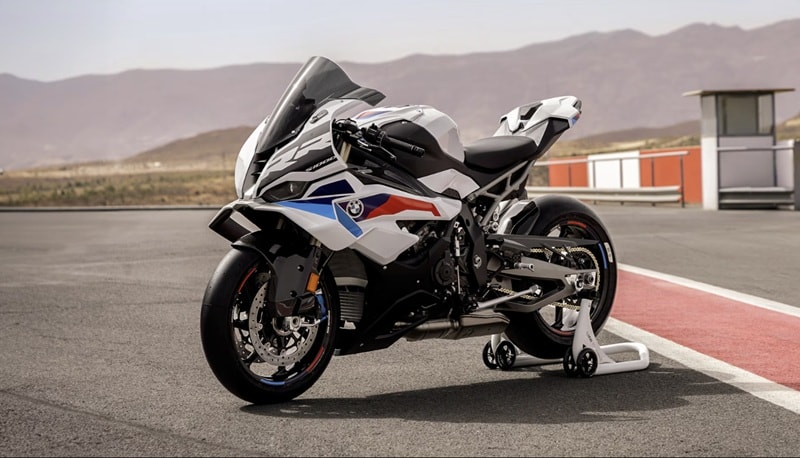
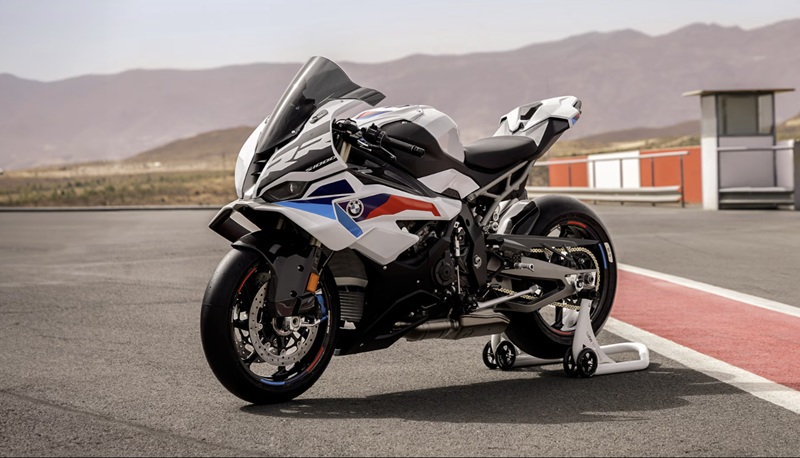
Riders shopping the 2026 BMW S 1000 RR around Washington, D.C. often narrow their build to one pivotal choice: add Dynamic Damping Control, or stay with the already brilliant standard chassis. We get it—our region’s mix of tight urban streets, patched pavement, sweeping parkway curves, and quick weekend blasts demands a setup that can adapt without compromise. Below, we explain exactly what DDC does on the RR, how it changes the feel on D.C. roads and nearby tracks, and who will benefit most from choosing it as part of the Dynamics package.
Dynamic Damping Control (DDC) is BMW’s electronically controlled suspension that adjusts damping in real time. On the 2026 BMW S 1000 RR, DDC uses a sophisticated sensor suite—including the steering angle sensor, wheel-speed data, brake input, throttle position, and IMU signals—to continuously refine fork and shock damping. The result is a chassis that stays composed when conditions change from one block to the next.
Importantly, the RR arrives exceptionally capable even before you consider DDC. The M chassis kit is standard and includes the raised rear end with an adjustable swingarm pivot, while frame flex zones are engineered for precision. Riding Modes Pro—also standard—unlocks Race Pro 1–3, Brake Slide Assist, and Slide/Slip Control through Dynamic Traction Control (DTC). DDC builds on that foundation by tailoring damping to your selected mode and your inputs, moment by moment.
Whether you are threading New York Ave NE, working through stop-and-go on I-395, or carving along Rock Creek Park or the George Washington Memorial Parkway, the surface is rarely consistent. Expansion joints, storm drains, pavement seams, and the occasional pothole challenge any superbike’s setup—especially when you also want precise feedback during quick lane changes or hard braking.
DDC senses load transfer and surface changes, then matches damping to the task at hand. Under firm braking into a cloverleaf, the fork resists excessive dive while keeping the tire planted for ABS Pro to work at its best. Over broken pavement or bridge joints, the system opens damping swiftly to maintain contact and comfort. When you roll back on the throttle to merge, DDC firms the rear to support drive without squatting. You feel more control with less effort—exactly what a high-performance chassis should deliver in a dense urban environment.
Many D.C.-area riders spend an occasional Friday at Summit Point or another regional circuit. In Race or Race Pro modes, DDC maps are calibrated to reduce lap-to-lap variability and support confident corner entry and exit. Because the RR’s steering angle sensor and DTC are already monitoring slide behavior, DDC works in harmony with Brake Slide Assist and Slide/Slip Control to keep the chassis composed as you push harder.
That synergy is key. The 2026 RR also borrows M Brake Ducts and performance-oriented cylinder head updates from the M RR, and the standard Shift Assistant Pro makes clutchless upshifts and downshifts fluid. Add DDC to that package, and you get a clear, predictable feel at the bars and pegs while retaining compliance when the track gets bumpy or temperatures swing.
To put it simply: the manual suspension baseline is excellent. DDC makes the sweet spot easier to find—then keeps you there as conditions evolve.
Because every rider’s routes and priorities are different, we like to frame the decision around how you plan to use your RR near Washington, D.C. This quick profile list can help.
If any of these sound like your real-world riding around the D.C. metro, DDC is an easy yes. If your RR will live primarily on smooth, familiar routes and you enjoy setting clickers once and leaving them, the standard hardware remains a superb choice.
We sometimes hear that electronically controlled suspension is only about comfort. On the 2026 S 1000 RR, DDC absolutely enhances ride quality on rougher streets—but the bigger story is tire loading and chassis stability as you accelerate, brake, and transition. When the bike stays in its operating window, electronics like BMW Motorrad ABS Pro, DTC, and Brake Slide Assist do their best work. That is performance, not just plushness.
Another concern is complexity. BMW engineered DDC for rigorous, everyday use. It integrates with the RR’s robust electrical system and 6.5 inch TFT interface, and it can be checked and updated during routine service. Our BMW Certified Technicians at Bob’s Motorcycles handle setup and diagnostics regularly—and we are happy to tailor the configuration to your preferences.
Regardless of suspension choice, the RR is a comprehensive performance platform: 205 hp at 13,000 rpm, 83 lb-ft at 11,000 rpm from the water-oil cooled inline four with BMW ShiftCam. Curb weight is a lean 437 lbs, and the aerodynamics have advanced with winglets that can generate meaningful downforce—up to 50 lbs at 186 mph, scaling progressively from 13 lbs at 93 mph and 35 lbs at 155 mph. The quick action throttle shortens wrist rotation for precise control, while the TFT screen’s Core Screen Memory helps you stay focused by returning to your last-used display after key cycles.
Riding Modes Pro, now standard, unlocks Race Pro 1–3 along with Pit Lane Limiter, Launch Control, Wheelie Control, Brake Slide Assist, Slide/Slip Control, HSC Pro, and DBC. The M Lightweight battery, M chassis kit, and Shift Assistant Pro are all part of the standard spec. If you want to further sharpen the build, the M package offers the M Sport seat and lightweight wheel options, while the Race package adds the low-maintenance M Endurance chain and a titanium exhaust system. DDC lives within the Dynamics package alongside heated grips and cruise control—useful additions for year-round riders who navigate the D.C. Beltway as often as they head for the mountains.
From our perspective, that balance is what makes the RR special near Washington, D.C.—a bike that can excel on a bumpy urban corridor in the morning and feel totally at home on smooth, fast sweepers by afternoon, then shift into a focused race setup for your next track day.
At Bob’s Motorcycles in Jessup, MD, our team rides the same corridors you do. We know how the Anacostia Freeway can feel on worn tarmac and how the Parkway rewards a composed front end. When you ask whether DDC is worth it, we look at your riding plan, your sensitivity to chassis feedback, and how often you will toggle between Rain, Road, Dynamic, Race, and Race Pro modes. From there, we help you configure the Dynamics package and any complementary options—like the M footrest system for fit and leverage—so the RR works with you from mile one.
If you are undecided, we can walk you through setup scenarios on the 6.5 inch TFT and explain how DDC parameters change with each mode. And if you know you want the lightest, most focused build possible, we can compare M Forged and M Carbon wheels and show how they influence steering response alongside DDC’s damping strategies.
Does Dynamic Damping Control change ride height on the 2026 BMW S 1000 RR?
No. DDC continuously adjusts damping—how quickly the suspension moves—not static ride height. Geometry is set by components like the M chassis kit’s raised rear and adjustable swingarm pivot, while preload settings determine sag. DDC manages the motion around those baselines.
Can I fine-tune DDC for track days near Washington, D.C.?
Yes. In Race Pro 1–3, the RR lets you tailor multiple parameters, and DDC aligns damping behavior with your selected mode. You can combine DDC mapping with custom DTC levels, Wheelie Control, Engine Brake settings, and more to build a setup for specific circuits like Summit Point.
How does DDC interact with BMW Motorrad ABS Pro and Brake Slide Assist?
They work in concert. DDC helps maintain tire contact and chassis stability as you brake, while ABS Pro optimizes braking in corners. Brake Slide Assist uses the steering angle sensor in conjunction with DTC to help control deceleration drifts; DDC supports the chassis as weight shifts forward so those systems can act predictably.
Is DDC durable for daily use on D.C.’s rougher streets?
DDC is engineered for everyday conditions and integrates cleanly with the RR’s electronics. During scheduled service, our BMW Certified Technicians can perform health checks and software updates so performance stays consistent over time—even with frequent city miles.
Bottom line: if your riding around Washington, D.C. ranges from uneven city pavement to fast regional routes—and especially if you enjoy the occasional track day—Dynamic Damping Control on the 2026 BMW S 1000 RR is a meaningful upgrade. Our team at Bob’s Motorcycles is ready to help you configure the Dynamics package and the rest of your RR build so the bike feels dialed in from the first ride and every ride after.

Read More about shipping exclusions
Please contact us if you have further questions.