Act NOW and SAVE 10% on Heated Gear with promo code STAYWARM Ends 10/31/2026.
Everyday Free Shipping on orders over $249 * See Exclusions
Act NOW and SAVE 10% on Heated Gear with promo code STAYWARM Ends 10/31/2026.
Everyday Free Shipping on orders over $249 * See Exclusions


Act NOW and SAVE 10% on Heated Gear with promo code STAYWARM Ends 10/31/2026.
Everyday Free Shipping on orders over $249 * See Exclusions
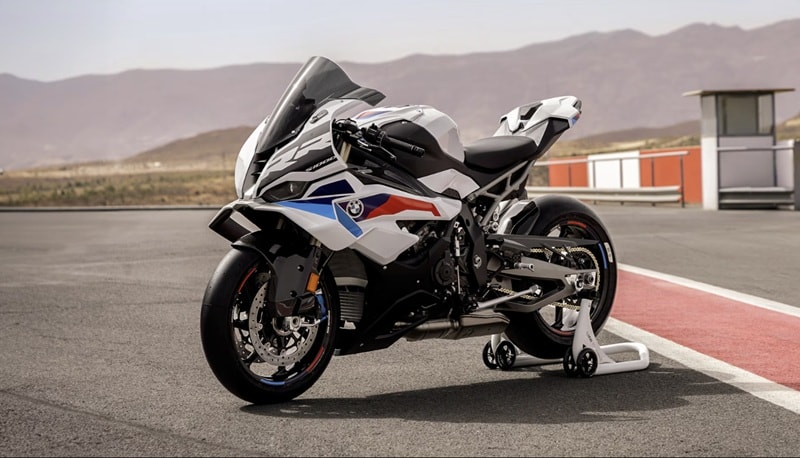
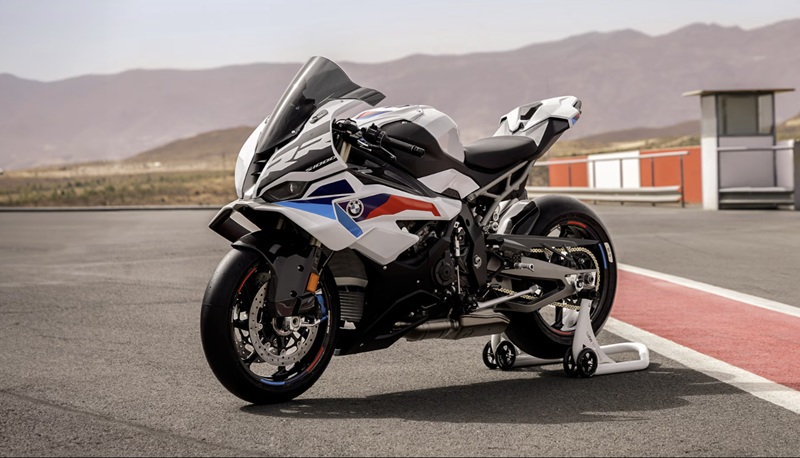
Riders who want a confident front end under hard acceleration often look to electronics first, but the latest generation of the BMW S 1000 RR reminds us that great aerodynamics can change the game before any algorithm steps in. Around Baltimore, MD — where fast sweepers meet short, punchy straights — the RR’s integrated winglets do more than look purposeful. They generate real downforce that helps you carry more throttle earlier, reduce reliance on Wheelie Control, and keep your chassis calmer as speed builds.
On paper, the numbers are compelling: approximately 13 lbs of downforce at 93 mph, 23 lbs at 124 mph, 35 lbs at 155 mph, and 50 lbs at 186 mph. On the road or a closed course, those pounds translate to a front tire that stays loaded when you want it most — cresting rises, driving out of a second-gear corner, or charging through a wind-swept section of highway. It is not just about ultimate top speed; it is about predictable weight distribution when your right wrist goes to work. That predictability is what makes a bike feel settled and allows you to focus on braking markers and exit lines instead of managing a light front.
Downforce is simply a consistent force pushing the front tire into the pavement as air flows over the bike. With the RR, BMW pairs a tall windscreen and reshaped side panels with winglets tuned to generate more downforce than the outgoing model — up to 37% more by BMW’s guidance. The impact appears in three places riders feel immediately: a steadier bar under hard drive, less headshake over imperfect pavement at speed, and reduced front-end lift that allows DTC and Wheelie Control to work less intrusively. The result is a cleaner, faster transition from apex to exit, especially on roads with short straights linking one corner to the next.
Locally, think about the mix of surfaces between Baltimore, MD, Washington, D.C., and the surrounding counties — patches, seams, and those long bridge decks that can unsettle a light front. The RR’s aero keeps more weight on the tire as you accelerate through those sections, so your corrections are smaller and you free up bandwidth for reading the next corner. For riders training technique, fewer corrections mean cleaner lines and faster improvement.
The smartest feature of the RR’s modern aero is how it complements the electronics, not competes with them. With Riding Modes Pro standard, the bike uses a steering angle sensor to inform Brake Slide Assist and DTC Slide/Slip Control, and BMW Motorrad ABS Pro adapts intervention based on lean and selected mode. Winglets reduce the situations where Wheelie Control needs to step in, letting you exit under steady torque instead of short, incremental bursts. That consistency makes it easier to notice when the electronics are helping — and how much room you have to adjust settings for your next session.
Braking feel benefits, too. With M Brake Ducts channeled into the front mudguard, the calipers stay cooler during repeated heavy stops. Pair that with extra front load from downforce and you get a more consistent lever feel, especially important when your ride includes several high-speed-to-mid-corner transitions. Confidence lives in that first quarter-inch of lever travel; stable temperatures and predictable tire load give it back to you every time.
Even if you are not chasing lap times, the aero upgrades still pay off. A tall windscreen and more efficient fairing work reduce helmet buffeting and rider effort during highway stints. That is welcome around Baltimore, MD’s beltways and I-95 corridors where wind shear and turbulence can get busy. Less fatigue is more focus, and more focus is more fun. Put differently — on a bike that already accelerates with ferocity, cutting the little distractions makes each mile feel easier and each input more precise.
For riders dialing in their cockpit, a few setup habits help you feel aero benefits sooner. Keep your upper body relaxed and elbows slightly bent to track the front’s feedback, and square your hips behind the tank pad when you get on the gas; both promote stability as downforce builds. Combine that with clean drive off the apex — roll on, do not jab — and you will notice the RR’s front tire talking to you more, not less, as speeds climb.
If your focus is extracting maximum value from the RR’s aero and stability, consider these upgrades. The M Package adds M Carbon wheels that reduce unsprung mass and sharpen transient response; you will feel the front change direction with less effort and greater accuracy. The Dynamics package includes Dynamic Damping Control (DDC), which adapts damping in Road, Dynamic, and Race (with Race Pro 1–3) to match inputs and surface changes. On variable pavement common to our region, DDC keeps the chassis calmer while aero keeps the front planted — a true one-two punch for confident pace.
That combination — lighter wheels, adaptive damping, better leverage, and measurable data — helps you learn faster while staying within your comfort zone. The beauty of the current RR is that its core platform remains friendly for daily riding, so you can enjoy the same benefits on your favorite backroads that you would on a training day at a closed course.
Will I notice the winglets if I rarely exceed highway speeds?
Yes, especially in strong headwinds or on rolling terrain. While downforce grows with speed, even moderate airflow adds subtle load to the front tire, which helps reduce lightness on crests and calms the bike as you exit corners onto short straights.
Do I need the Dynamics package to take advantage of the aero?
No. The RR’s standard chassis, geometry, and winglets already provide a composed front end. The Dynamics package adds DDC to broaden that composure on variable pavement; it is a meaningful upgrade if your routes include uneven surfaces.
How do BMW Motorrad ABS Pro and downforce interact?
ABS Pro adapts braking to lean and mode, while downforce improves front tire loading at speed. More consistent load means more predictable braking feel and less abrupt intervention when you transition from upright braking to trail braking.
Is there a learning curve to feel the benefits?
Very little. Focus on smooth throttle application and stable body position. As you roll on earlier and more consistently, the winglets do their work in the background, and you will feel the front stay calmer with fewer corrections needed.
If you are ready to make those benefits part of every ride, Bob's Motorcycles — serving Baltimore, MD, Washington, D.C., and Arlington, VA — can help you choose the right configuration and accessories to match your goals. The latest RR rewards good habits and builds better ones, one clean exit at a time.

Read More about shipping exclusions
Please contact us if you have further questions.