Helmet Sale! Get 15% OFF reg. priced Helmets with promo code HELMET15 Shop Now>>
Get an EXTRA 15% OFF Everyday Low Price Tires with promo code TIRES15 >> SHOP NOW
Everyday Free Shipping on orders over $249 * See Exclusions
Helmet Sale! Get 15% OFF reg. priced Helmets with promo code HELMET15 Shop Now>>
Get an EXTRA 15% OFF Everyday Low Price Tires with promo code TIRES15 >> SHOP NOW
Everyday Free Shipping on orders over $249 * See Exclusions


Helmet Sale! Get 15% OFF reg. priced Helmets with promo code HELMET15 Shop Now>>
Get an EXTRA 15% OFF Everyday Low Price Tires with promo code TIRES15 >> SHOP NOW
Everyday Free Shipping on orders over $249 * See Exclusions
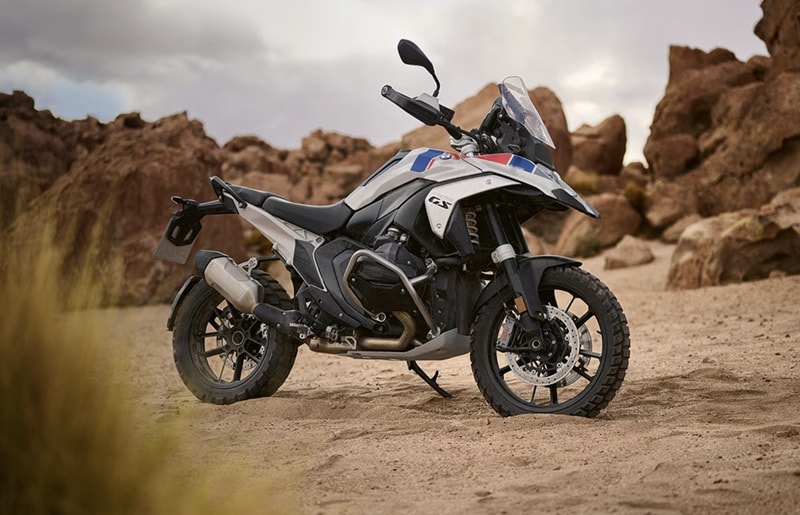
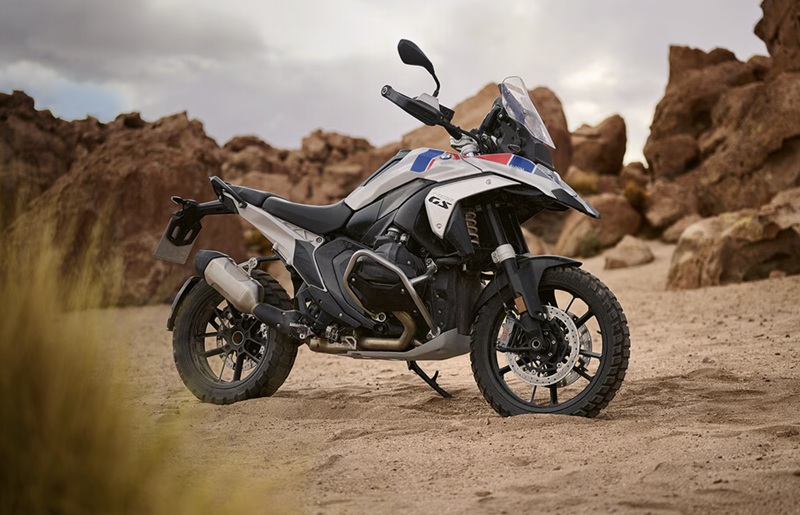
In the real world, most adventure motorcycles split time between city traffic, winding suburban connectors, and the occasional dirt stretch to a campsite. That’s why so many riders ask a simple, high-impact question: which one feels calmer and easier when speeds drop, surfaces change, and you need to make smooth, confident moves? If you are weighing the 2026 BMW R 1300 GS against the 2026 Harley-Davidson® Pan America® 1250 Limited, low-speed composure and everyday versatility become decisive. Each model packs cutting-edge electronics and lighting, but they create very different ride experiences when you leave the spec sheet and head into Washington, D.C.’s tight urban patterns or head out for a mixed-terrain day trip.
Let’s frame the contrast quickly. The Pan America® 1250 Limited brings strong peak power, semi-active suspension, standard Adaptive Ride Height, and a Screamin’ Eagle Quickshifter. It’s a serious collection of hardware that helps manage stops and starts and provides eager acceleration. The BMW responds with a different formula: 110 lb-ft of boxer torque for immediate, tractable response, a low 523 lb curb weight for effortless balance, the unique synergy of EVO Telelever and EVO Paralever for anti-dive stability, and a set of available assists—Dynamic Suspension Adjustment (DSA), Adaptive Vehicle Height Control, radar-based Active Cruise Control (ACC), and the Automated Shift Assistant (ASA)—that are tuned for real-world smoothness. Both are advanced; one just makes the entire low-speed spectrum feel more composed and less demanding.
Low-speed confidence is a sum of predictable throttle response, manageable mass, steering stability, and how suspension and brakes behave when you are balancing, turning, or stopping. The 2026 R 1300 GS’s boxer produces its torque early and evenly, which makes tiny mid-corner throttle corrections easy and precise. EVO Telelever keeps the chassis composed under front braking—less dive means your geometry stays consistent, so it feels like your steering inputs are magnified in a helpful, linear way. On uneven pavement, EVO Paralever reduces squat and wallow, keeping your line intact. The Pan America®’s semi-active suspension does a commendable job of adapting damping, and Adaptive Ride Height can lower the bike at stops, but the heavier curb weight is always along for the ride. When you need to thread traffic or U-turn on a narrow street, you feel the difference.
Then there is the way controls minimize workload. The BMW’s Automated Shift Assistant is more than a quickshifter—it manages clutch engagement and can shift automatically, letting you modulate speed with laser focus while the bike handles gearbox chores. If you have ever tried to roll smoothly onto a crowned side street while feathering the clutch and scanning for cross-traffic, you get why this matters. Harley-Davidson® equips the Pan America® 1250 Limited with a quickshifter that’s useful at speed, but it doesn’t replace the clutch around town, in the alley, or during slow technical sections.
Both bikes deliver lean-sensitive ABS and traction aids. BMW’s standard suite—BMW Motorrad Full Integral ABS Pro, Dynamic Traction Control (DTC), Hill Start Control (HSC), Dynamic Brake Control (DBC), Dynamic Cruise Control (DCC), Engine Drag Torque Control (MSR), and TPM—feels integrated and seamless. Those systems quietly reduce the chance of stalls, slides, and roll-backs on hills. The Pan America® 1250 Limited counters with Cornering Rider Safety Enhancements, including C-ABS, C-TCS, C-ELB, and more. The net effect for either bike is confidence, but paired with the GS’s lighter mass and anti-dive geometry, the BMW’s tech feels like it is predicting your next move, not reacting to your last one. Add available ACC on the GS for smoother highway merges and steady follow distances on the Beltway, and fatigue drops even further.
Lighting is another comfort layer that matters during pre-dawn commutes and late returns. BMW’s LED matrix headlight has a distinct signature, and with optional Headlight Pro the adaptive function sweeps light into corners as you lean. Harley-Davidson® equips the Pan America® 1250 Limited with a Daymaker Adaptive Headlamp and auxiliary lighting, which deliver excellent coverage. Both illuminate confidently; the GS simply stacks that visibility atop its already calm chassis feel.
Seat height and reach-to-controls can make or break low-speed composure. The Pan America® 1250 Limited’s Adaptive Ride Height helps reduce the step to the ground at a stop, and many riders appreciate that. The BMW’s available Adaptive Vehicle Height Control achieves a similar goal, and the GS platform supports a broad range of OEM seats to tune height and shape. Once rolling, the GS’s lower mass is the constant advantage—you sense it while paddling out of tight parking, carrying momentum at walking speed, or bumping over a pothole without deflection.
Drive systems are another difference that affects ownership rhythm. The GS’s cardan shaft drive asks very little of you and stays clean, which is nice when you park in a garage or navigate city grime. The Pan America® 1250 Limited’s chain final drive is fully capable but demands periodic adjustment and cleaning, which is a commitment some commuters prefer to skip.
Imagine a morning that starts with urban gridlock, turns into a 30-minute interstate hop, and ends with a gravel access road to a trailhead. On the GS, you glide through the crawl with light steering and no drama under the brakes, shift effort goes away with ASA, and if equipped, ACC keeps gaps tidy without constant input. The boxer’s torque makes short work of highway merges, and on gravel the chassis remains composed during downhill braking and mid-corner bumps. On the Pan America® 1250 Limited, peak power is satisfying on-ramps, the quickshifter helps on the open road, and ARH eases footing at stops. Off-pavement, the hardware works, but you are always managing more mass and a bit more weight transfer in transitions.
If your ride calendar blends Beltway commutes, weekend backroads, and the occasional unpaved connector, the 2026 BMW R 1300 GS has the more versatile, lower-stress temperament. Riders who want a turnkey kit with standard ARH and factory luggage may gravitate toward the 2026 Harley-Davidson® Pan America® 1250 Limited. Both are real ADV machines. But if you value the feeling that the bike is constantly simplifying your inputs—especially at low speed—the GS’s torque curve, weight, suspension geometry, and available ASA/ACC package rule the day.
When you are ready to fine-tune fit, storage, and protection, the BMW ecosystem shines. Between the Vario luggage system, protection packages, heated seats, and the ConnectedRide Navigator, you can tailor your GS for city-first duty or multi-state exploration. That kind of modularity helps riders grow into the platform over time. You can always add or change later without compromising the bike’s core balance.
Does the 2026 BMW R 1300 GS or the 2026 Harley-Davidson® Pan America® 1250 Limited handle low-speed maneuvers better?
Both manage slow riding with advanced electronics, but the BMW’s lower weight, torque delivery, anti-dive EVO Telelever, and the availability of Automated Shift Assistant provide a calmer, less demanding feel in tight spaces.
Is Adaptive Ride Height unique to Harley-Davidson®?
Harley-Davidson® offers ARH as standard on the Pan America® 1250 Limited. BMW offers Adaptive Vehicle Height Control as an available feature on the R 1300 GS, achieving a similar effect with an emphasis on subtle, confidence-boosting transitions.
Which bike is easier to maintain for daily commuting?
The GS uses a cardan shaft final drive for low maintenance and clean operation. The Pan America® uses a chain that requires periodic cleaning and adjustment, which is normal but more hands-on for frequent commuters.
How do the lighting systems compare for early morning or late-night rides?
BMW’s LED matrix headlight with optional Headlight Pro provides adaptive cornering light via matrix control. The Pan America® 1250 Limited has a Daymaker Adaptive Headlamp and auxiliary lighting. Both deliver excellent road coverage; the BMW system pairs cleanly with its broader electronics suite.
You will find knowledgeable guidance at Bob's Motorcycles, serving Washington, D.C., Arlington, VA, and Alexandria, VA, where our team can help you weigh low-speed control, long-haul comfort, and real-world upkeep in a way that matches your exact use case.

Read More about shipping exclusions
Please contact us if you have further questions.