Helmet Sale! Get 15% OFF reg. priced Helmets with promo code HELMET15 Shop Now>>
Get an EXTRA 15% OFF Everyday Low Price Tires with promo code TIRES15 >> SHOP NOW
Everyday Free Shipping on orders over $249 * See Exclusions
Helmet Sale! Get 15% OFF reg. priced Helmets with promo code HELMET15 Shop Now>>
Get an EXTRA 15% OFF Everyday Low Price Tires with promo code TIRES15 >> SHOP NOW
Everyday Free Shipping on orders over $249 * See Exclusions


Helmet Sale! Get 15% OFF reg. priced Helmets with promo code HELMET15 Shop Now>>
Get an EXTRA 15% OFF Everyday Low Price Tires with promo code TIRES15 >> SHOP NOW
Everyday Free Shipping on orders over $249 * See Exclusions
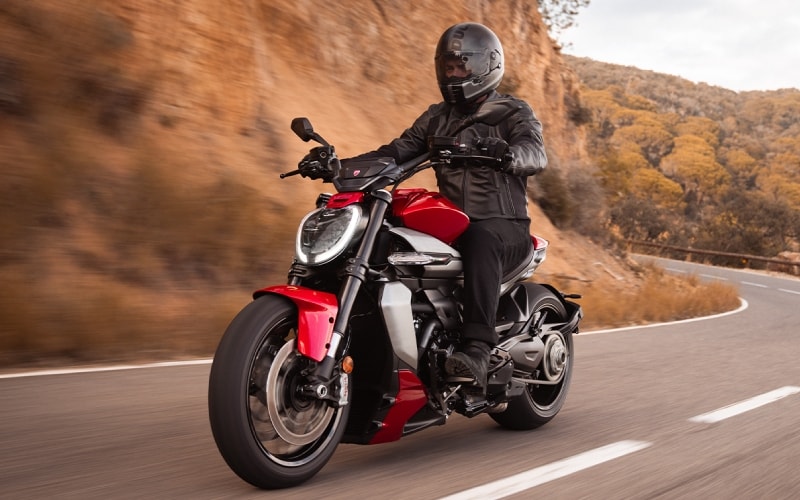
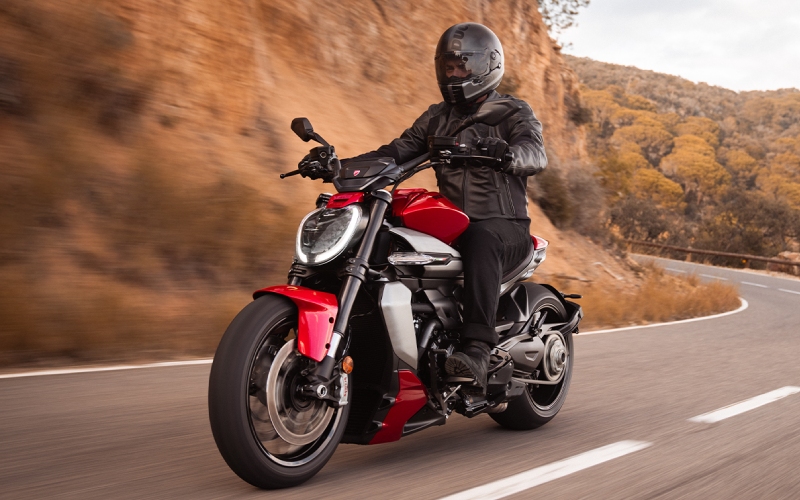
When riders ask which bike makes everyday riding in and around Washington, D.C. feel effortless, the conversation quickly becomes a comparison between Ducati’s new XDiavel V4 and Triumph’s Rocket 3 Storm. Both are head-turning muscle cruisers, but they’re engineered with very different priorities. The Ducati aims to deliver sport-bike precision wrapped in a relaxed, forward-control posture, while the Triumph leans into immense, low-rpm shove and grand-touring comfort. If your commute or weekend routes include tight urban connectors, roundabouts, and frequent starts and stops, the details that matter most are low-speed balance, heat management, steering response, and how intuitive the electronics feel in real-world traffic.
On those points, Ducati’s 1,158 cc V4 Granturismo architecture is a subtle game-changer. With 168 hp and 93 lb-ft—and a willingness to spin to a 10,750 rpm peak—the XDiavel V4 responds cleanly to small throttle inputs and settles quickly when you roll off. Even better, rear cylinder-bank deactivation helps cut waste heat and fuel use at idle or steady cruise. That makes a noticeable difference at long lights or during stalled Beltway stretches. Triumph’s 2,458 cc triple has a different superpower: record-breaking torque. The Rocket 3 Storm surges forward with a twist of the wrist and makes highway roll-ons almost comically easy. But the bike’s significant mass is always present, especially at parking-lot speeds and on off-camber side streets. Both bikes have robust IMU-based Cornering ABS and traction control, so you get modern safety backstops in the rain and on slick Washington, D.C. crosswalk paint. Where they diverge is how naturally they tip in and settle as you thread through traffic or make quick, last-second lane adjustments.
With a wet weight listed (no fuel) at 505 lb, the Ducati starts with a huge advantage in mass and balance. You feel it when U-turning on a narrow street or sneaking into a tight parking space next to a sidewalk café. The forward controls and 30.3-inch seat height keep your posture relaxed without making the front end feel vague—steering remains crisp, which is rare in this segment. The Triumph Rocket 3 Storm’s suspension quality and premium Brembo Stylema brakes are excellent, and the GT’s more relaxed ergos are tailored for plush, long-mile days. But in the short, choppy rhythm of city riding, the Ducati’s nimbleness is the quality you’ll notice most.
Electronics integration also feels especially polished on the Ducati. Riding Modes and Power Modes transition smoothly, the up/down quickshifter is intuitive at low rpm, and the overall calibration favors predictable response at small throttle openings. Triumph’s ride modes and cruise control are similarly useful, and Shift Assist is available, but the Ducati’s tuning and lighter mass amplify the benefits.
Heat management matters in Washington, D.C. summers and during midday traffic. Ducati’s rear-bank deactivation reduces radiant heat when stationary or lightly cruising, a technology advantage the Triumph doesn’t match. Over the long term, Ducati’s 37,000-mile valve clearance interval—rooted in the V4 Granturismo’s engineering—means fewer major service visits. Triumph lists 10,000-mile service intervals on the Rocket 3 Storm, which is simple to track, but you’ll see the service light more often. Neither bike skimps on component quality; each uses premium suspension and braking hardware that feels reassuring on imperfect pavement and across steel-deck bridges.
For fit and finish, both bikes are standouts. Ducati’s Burning Red and Black Lava colorways emphasize muscular surfaces, while Triumph’s finishes and detailing are consistently top-tier. Ergonomically, the Ducati’s forward controls, low seat, and wide bars maintain a comfortable, connected feel; Triumph offers R and GT positions so you can choose between mid-controls or a more relaxed layout. Test how these postures feel in your riding boots—small differences can matter on a long day.
If your priority is low-speed ease and intuitive control with high-end safety tech, the Ducati XDiavel V4 is the easier bike to manage through Washington, D.C. traffic. The Triumph Rocket 3 Storm counters with breathtaking torque and long-haul confidence, making it a phenomenal machine for highway-dominant days. The Ducati’s lighter weight and refined calibration tip the scale for short hops, garage maneuvers, and dense urban grids.
Our role is to translate spec sheets into how the bike will feel at the end of a long weekday and at the start of a great weekend. We look at where you ride most, which features reduce your daily friction, and how you want the bike to look and feel after personalization. The Ducati’s platform responds beautifully to small ergonomic and aesthetic tweaks; Triumph’s ecosystem is equally deep for long-mile comfort builds. Whether you want a subtly sharpened Ducati for daily city runs or a touring-leaning setup for weekend escapes, you’ll find a clear path to a personalized ride.
Does the Ducati’s rear-bank deactivation make a real difference in city riding?
Yes. By cutting combustion on the rear cylinder bank at idle or steady cruise, the XDiavel V4 reduces waste heat and fuel use. In practical terms, that means less radiator fan time and a cooler feel when waiting at long lights or inching forward on busy streets.
Which bike feels lighter at parking-lot speeds?
The Ducati. Its significantly lower mass and balanced chassis geometry make slow-speed turns, angled driveways, and tight U-turns feel easier. The Triumph is stable and composed but asks for more input when you’re crawling or maneuvering in tight quarters.
Do both bikes include Cornering ABS and modern traction control?
Yes. Each bike uses IMU-supported systems with multiple ride modes for adaptable response in changing conditions. That translates to added confidence when pavement quality or weather varies across Washington, D.C. corridors.
What about long-term maintenance planning?
Ducati’s V4 Granturismo design enables a 37,000-mile valve clearance check interval, which limits major downtime. Triumph lists 10,000-mile service intervals on the Rocket 3 Storm, easy to plan around but more frequent.
Bob’s Motorcycles is serving Washington, D.C., Arlington, VA, and Alexandria, VA, with expert guidance on both models—helping you pinpoint the right configuration and accessories for your city routes and weekend plans while keeping ownership simple and satisfying.

Read More about shipping exclusions
Please contact us if you have further questions.